




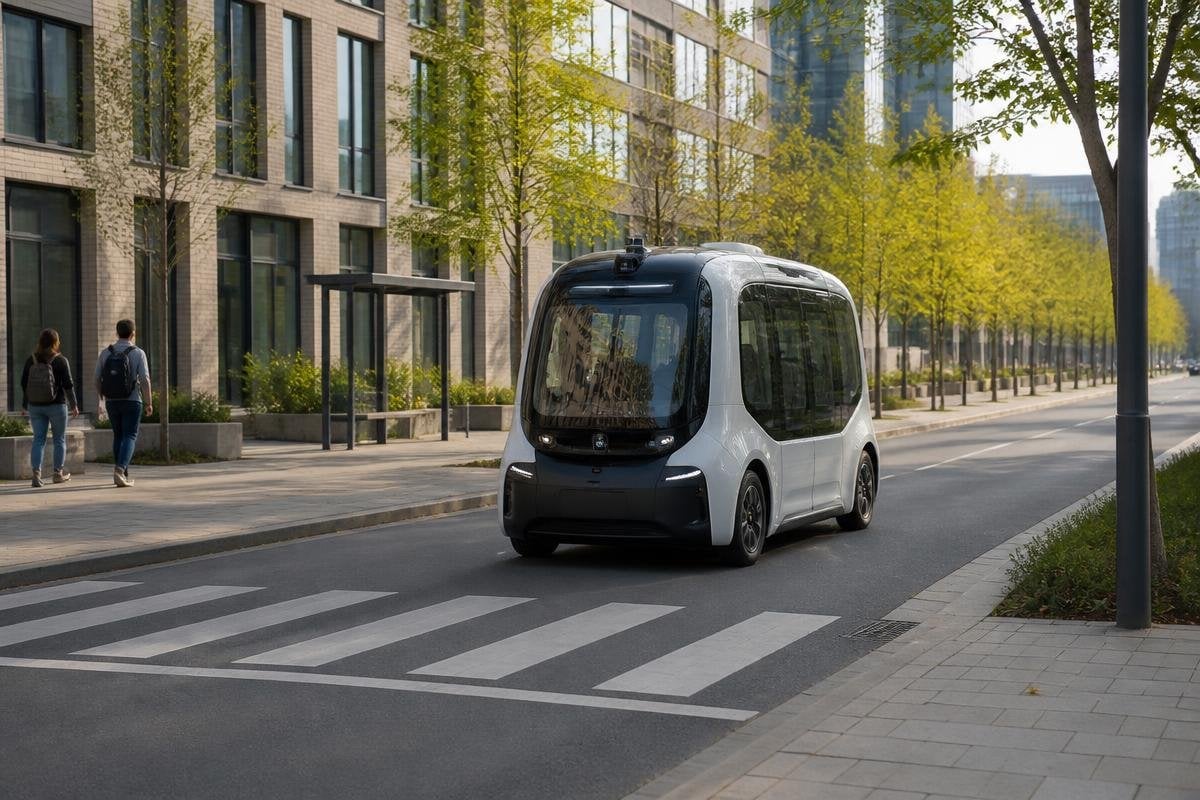
A robot shuttle can carry passengers along a mapped route without a person driving every trip. Its value will depend less on the shape of the vehicle than on where it runs, how it handles people, and what happens when the system stops.
- Fixed routes make the first deployments easier to check.
- Cameras, LiDAR, and remote support share the driving work.
- Bad weather, blocked lanes, and public trust still set limits.
The first routes will be narrow
City transport planners are more likely to start with a defined service area than with open driving across a whole city. One route might connect a train station to an office district, move people around a hospital site, or run between a car park and a busy street.
That narrow route gives the operator a known map and a limited set of road conditions. The system can mark crossings, loading areas, lane edges, and places where people often step into the road.
A smaller service area leaves staff fewer places to watch when the shuttle needs a remote decision. This matters to you as a passenger because a route that works at noon may behave differently after dark or during road repairs.
The system needs a plan for temporary signs, delivery vehicles, cyclists, and pedestrians who do not follow the marked path.
How the shuttle sees the road
Robot shuttles use several sensors instead of relying on one camera. LiDAR measures distance with laser pulses, cameras read signs and road users, and other sensors track the vehicle’s position on its map.
The computer combines those inputs many times during a trip. It can slow near a crossing, stop behind an object, or request a remote operator when the scene falls outside its rules.
That person may supervise several vehicles, but the exact role depends on the system and local safety rules. A remote operator cannot remove every problem.
A blocked sensor, poor wireless link, or road layout that differs from the map can still stop the shuttle. The useful question for a city is not whether the vehicle can drive on a clear route. It is how often it needs remote decisions on an ordinary one.
A city planner needs more than a smooth test route. Robot24.com shuttle trial reports can place each shuttle’s route, remote support, sensor setup, and transport rules beside the claims. That record leads to the next question: what changes when the vehicle shares roads with buses, bikes, and people?
What changes for city transport
Following a repeat route could connect parts of a trip that buses serve poorly. The shuttle may cover the short distance between a station and a workplace, or offer a link across a site where a full-size bus would cost too much to run.
The service could also change how cities plan streets. A vehicle that needs a mapped path, safe stopping points, and clear road markings may push planners to improve crossings and curb space. Those changes would also aid human drivers and cyclists, but they take time and public money.
The fare matters as much as the driving system. If a shuttle needs a safety operator, cleaning staff, charging space, and a support team, the cost of each trip may stay high.
If it carries only a small number of people, the city must show why that route deserves a shuttle instead of a regular bus or accessible taxi.
Robot shuttles won’t replace city buses soon. Their first useful job is more likely to be a short connection that fits a clear gap in the existing network.
Where the plan can fail
Weather is one concern. Rain, snow, glare, fog, and dirty sensor covers can make road data harder to read.
Construction creates another problem because cones and temporary lanes can move the road away from the stored map. Passenger safety adds a separate set of needs.
The shuttle must stop in a safe place, let people enter and leave without stepping into traffic, and give clear instructions during a fault. People with wheelchairs, luggage, or limited mobility need enough space and time to board.
Public trust will come from repeated service, not from a smooth demonstration. Riders will judge the shuttle by small events: a long pause at a crossing, a confusing alert, or a trip that ends because a parked vehicle blocks the lane.
I’d support robot shuttles where they fill a measured transport gap, with a regular bus or staffed service kept nearby during the trial.
A practical test for a city route
Before a city approves service, planners should check:
- Route limits: Can staff describe the exact roads, stops, crossings, and conditions the shuttle will handle?
- Human support: Who takes control when the vehicle stops, and how quickly can they respond?
- Passenger access: Can wheelchair users board, exit, and reach an emergency control without help?
- Service cost: What will each trip cost after staff, charging, cleaning, insurance, and repairs?
- Failure plan: Where does the shuttle go when rain, roadwork, a blocked lane, or a sensor fault ends the trip?
The next useful test is simple: run the shuttle on a public route through ordinary roadwork and bad weather, then publish how often it stopped for remote decisions. Until cities have that record, robot shuttles belong on selected routes, not across the whole transport network.
